The Hidden Connection Between Chronic Stress, Digestive Health, and Stomach Ulcers
Have you ever noticed that your stomach seems to react when life becomes overwhelming?
Perhaps you experience a burning sensation after a stressful day. Maybe your appetite changes during difficult periods. Or perhaps persistent digestive discomfort appears when you’re carrying emotional burdens that seem impossible to put down.
While peptic ulcers are often associated with factors such as Helicobacter pylori infection and the overuse of certain pain medications, chronic stress can play a powerful role in creating the conditions that allow digestive problems to develop and worsen.
The truth is that your mind and digestive system are deeply connected.
When stress becomes chronic, it doesn’t stay in your thoughts. It affects your hormones, immune system, digestion, inflammation levels, and the protective mechanisms that help keep your stomach healthy.
Understanding this connection may be one of the most important steps toward supporting long-term digestive wellness.
Heal Naturally. Live Fully.
Discover strategies inside The Chronic Disease Reversal Bible by Alfred Okoko and learn how diet, herbs, lifestyle, and natural healing principles can help you reclaim your health naturally.
Get your copy today on [Selar](https://selar.com/86x2iy3794
What Are Peptic Ulcers?
Peptic ulcers are open sores that develop in the lining of the stomach or the upper part of the small intestine.
The most common types include:
- Gastric ulcers (inside the stomach)
- Duodenal ulcers (upper small intestine)
Common symptoms may include:
- Burning stomach pain
- Upper abdominal discomfort
- Nausea
- Bloating
- Indigestion
- Loss of appetite
- Feeling full quickly
In more severe cases, ulcers can lead to complications such as bleeding and require urgent medical attention.
The Traditional Causes of Peptic Ulcers
Medical research has identified two major contributors to most peptic ulcers:
1. Helicobacter pylori (H. pylori)
This bacterium can weaken the stomach’s protective lining, making it more vulnerable to damage from stomach acid.
2. Long-Term Use of NSAIDs
Nonsteroidal anti-inflammatory drugs (NSAIDs), such as certain pain relievers, can reduce the stomach’s natural protective mechanisms when used frequently or over long periods.
However, these factors don’t tell the entire story.
Many people with similar exposures never develop ulcers, while others do.
This is where stress enters the conversation.
The Stress-Ulcer Connection
Stress may not directly create every ulcer, but it can significantly influence the environment in which ulcers develop.
Think of stress as a multiplier.
It amplifies existing vulnerabilities.
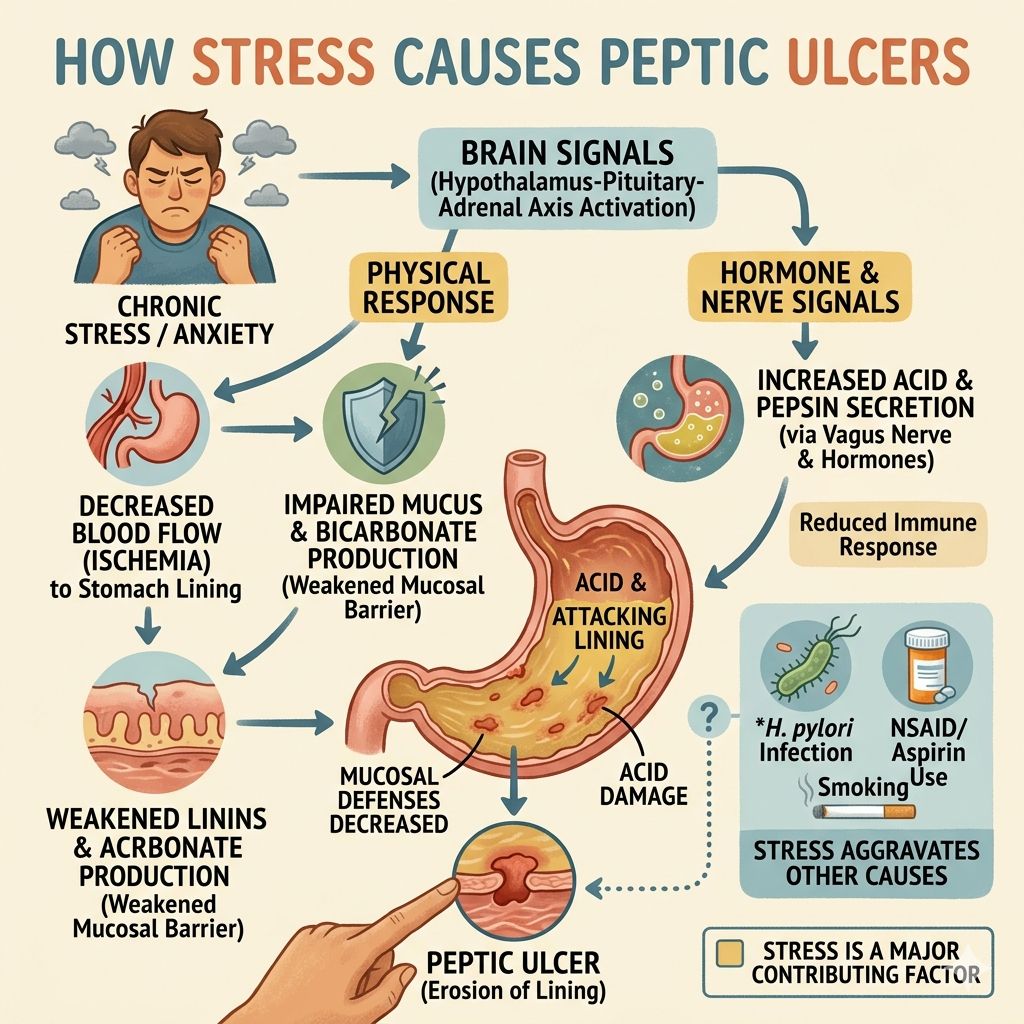
When stress becomes chronic, the body shifts into a survival state.
This activates the “fight-or-flight” response, which was designed to help humans survive short-term dangers.
The problem is that modern stress often lasts for weeks, months, or even years.
The body was never designed to remain in survival mode indefinitely.
What Happens to the Body During Stress?
When stress occurs, the brain signals the release of stress hormones such as:
- Cortisol
- Adrenaline
These hormones help prepare the body for action.
Short-term stress can be helpful.
Chronic stress, however, creates problems throughout the body, including the digestive system.
How Stress Affects Digestion
One of the first systems affected by stress is digestion.
When the body believes it is facing danger, digestion becomes a lower priority.
As a result:
- Blood flow to the digestive tract may decrease
- Digestive secretions may become altered
- Stomach emptying may change
- Protective repair mechanisms may slow down
Over time, these changes can contribute to digestive discomfort and vulnerability.
Stress and Excess Stomach Acid
Stress may influence acid production in some individuals.
Although the relationship is complex, prolonged stress can contribute to digestive disturbances that increase irritation of the stomach lining.
When protective defenses weaken while irritation increases, the risk of damage rises.
Imagine pouring acid onto skin that has already lost its protective barrier.
The damage occurs more easily.
The same principle applies inside the digestive tract.
Stress Weakens the Protective Stomach Lining
Your stomach is remarkably designed.
Despite containing powerful digestive acids, it normally protects itself using:
- Mucus production
- Blood flow
- Cellular repair systems
- Protective compounds
These mechanisms form a barrier between stomach acid and the stomach wall.
Chronic stress may interfere with these protective systems.
As protection weakens, the lining becomes more vulnerable to irritation and injury.
Stress and Inflammation
Stress doesn’t just affect the mind.
It can also increase inflammatory activity throughout the body.
Chronic inflammation may:
- Slow healing
- Increase tissue sensitivity
- Reduce resilience
An inflamed digestive system often struggles to repair itself efficiently.
When healing slows, ulcers may persist longer and symptoms may worsen.
The Gut-Brain Connection
Scientists now recognize what many traditional healing systems have understood for centuries:
The gut and brain constantly communicate.
This relationship is often called the gut-brain axis.
When stress affects the brain, signals travel directly to the digestive system.
As a result, emotional distress can contribute to:
- Stomach discomfort
- Nausea
- Acid reflux symptoms
- Changes in appetite
- Digestive irritation
The stomach often becomes the place where emotional stress expresses itself physically.
Buy Nurturing Self-care Practices for Healing: A 12 Week Program For Optimal Healing by Alfred Okoko on Selar https://share.google/ydpRFnSbDECSkusTC
Signs That Stress May Be Affecting Your Digestive Health
You may notice a connection between stress and digestive symptoms if:
- Symptoms worsen during stressful periods
- Burning sensations increase when anxious
- Appetite changes during emotional challenges
- Digestive discomfort improves during vacations or periods of relaxation
- Sleep disturbances accompany stomach symptoms
These patterns often provide important clues.
The body is communicating.
My Personal Perspective on Stress and Ulcer Recovery
One of the most important lessons many people discover during their healing journey is that managing symptoms alone is rarely enough.
If stress remains unresolved, the body may continue operating in a state of internal tension.
Many individuals find that when they improve:
- Sleep quality
- Emotional wellbeing
- Stress management
- Daily routines
their digestive health often improves alongside these changes.
This doesn’t mean ulcers are “all in the mind.”
It means the mind and body work together.
How to Reduce Stress Naturally
Supporting digestive health often involves supporting the nervous system.
Simple practices may help:
Deep Breathing
Slow breathing can activate the body’s relaxation response.
Walking
Gentle movement helps reduce stress hormones and improve circulation.
Prayer and Meditation
Many people find spiritual practices calming and restorative.
Journaling
Writing down worries may help reduce mental overload.
Time in Nature
Natural environments often help calm the nervous system.
Social Connection
Meaningful relationships can reduce feelings of isolation and stress.
Nutrition Matters Too
Stress and nutrition are closely connected.
When stressed, many people consume:
- Excess caffeine
- Sugary foods
- Processed snacks
- Alcohol
These habits may further irritate the digestive system.
Instead, focus on:
- Fresh vegetables
- Fruits
- Whole foods
- Adequate hydration
- Balanced meals
A nourished body is often better equipped to heal.
The Importance of Sleep
Sleep is one of the body’s primary repair mechanisms.
During sleep, the body works to:
- Repair tissues
- Regulate hormones
- Reduce inflammation
- Restore balance
Poor sleep can increase stress while slowing healing.
Prioritizing rest may be one of the most effective strategies for supporting digestive recovery.
When to Seek Medical Attention
Although lifestyle changes can support digestive health, peptic ulcers can sometimes become serious.
Seek medical care if you experience:
- Severe abdominal pain
- Vomiting blood
- Black or tarry stools
- Unexplained weight loss
- Difficulty swallowing
These symptoms require prompt professional evaluation.
The Bigger Lesson: The Body Keeps Score
One of the most powerful truths about health is that the body remembers what the mind tries to ignore.
Chronic stress often leaves physical fingerprints.
Sometimes those fingerprints appear in the stomach.
The body is not punishing you.
It is responding to the environment—both internal and external—that it experiences every day.
Final Reflection: Healing the Stomach May Begin With Calming the Mind
Peptic ulcers are complex conditions with multiple contributing factors.
While bacteria and medications play important roles, chronic stress can create an internal environment that weakens digestive resilience and slows healing.
The goal is not simply to eliminate symptoms.
The goal is to support the entire system.
When you nourish your body, improve your sleep, manage stress, and create space for recovery, you help restore the conditions that allow healing to occur.
Sometimes the stomach is not just asking for medicine.
Sometimes it is asking for rest.
Sometimes it is asking for balance.
And sometimes it is asking you to pay attention to the burdens you have been carrying for far too long.
 Wordplant Living System